Developed by the 10-Year Working Group, the proposed model seeks to broaden member participation, strengthen the network’s strategic action and boost its technical output
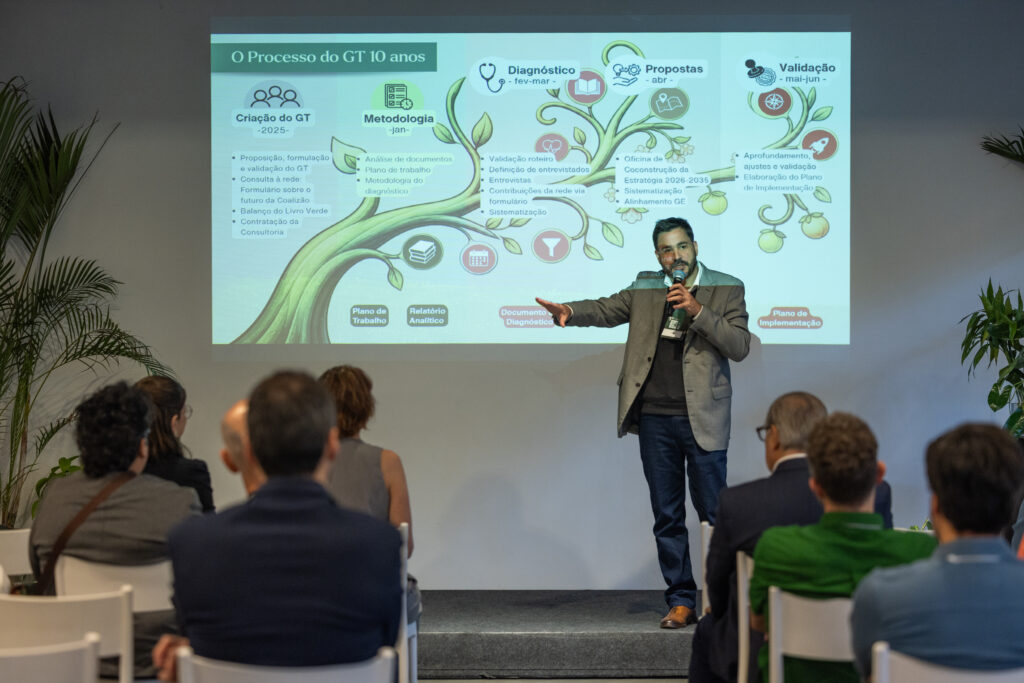
The Brazilian Coalition on Climate, Forests and Agriculture presented a series of proposals to reorganize the network’s structure for its next decade during its plenary meeting held in São Paulo on July 3. The new model provides for the creation of an Executive Directorate and an Advisory Council, the transformation of the current 12 task forces into four Thematic Hubs, the strengthening of the Strategic Group and greater engagement among member organizations.
The changes were developed by a special working group, the 10-Year Working Group, established in December last year to assess how the Coalition’s structure should evolve through 2035. The network’s founding principles were not revisited and continue to be recognized as the basis of its identity and work.
Led by former co-facilitator Fernando Sampaio, the working group brought together 19 representatives from different governance bodies and the Executive Coordination team, reflecting the network’s diversity of perspectives. Its proposals were informed by an analysis of 23 historical documents, including founding publications and materials on governance, operational strategies and financing.
The assessment also incorporated interviews with external and internal stakeholders recognized for their broad engagement in the agriculture and environmental agenda, as well as consultations with task force leaders and members of the Executive Group and Strategic Group, the Coalition’s main governance bodies.
Members submitted their contributions through a survey and discussed the issues in greater depth during the latest edition of the annual Members’ Meeting. The working group, in turn, held two in-person workshops to co-create the proposals.
The process’s main conclusion is that the Coalition has reached its tenth anniversary with solid strategic foundations, but needs to update its governance architecture to remain relevant, agile and effective. The structure that supported the network’s creation and expansion during its first decade must now give way to a model capable of better organizing political engagement, technical output and member participation.
In this context, the proposed Executive Directorate is intended to bring together the management and implementation of the Coalition’s strategy. The Advisory Council, meanwhile, is expected to serve as a high-level advisory body, bringing together leaders capable of contributing strategic insight and supporting the Coalition’s external engagement.
Another major change is the replacement of the current 12 task forces with four Thematic Hubs. The proposal seeks to reduce the fragmentation of discussions, foster greater integration among different agendas and better organize the network’s technical output.
Strengthening the Strategic Group, which will be renamed the Strategic Council, is also part of the new model. The proposal gives the body a clearer role in guiding the network, helping to set priorities, monitor the implementation of the strategy and ensure coherence across the Coalition’s different areas of work.
The changes will be implemented gradually over the coming months. The plan presented by the working group provides for an orderly transition, with opportunities for member participation.
Through this process, the Coalition seeks to prepare for a new decade of work in support of a low-carbon land-use economy capable of reconciling agricultural production, environmental conservation and action to address the climate crisis.